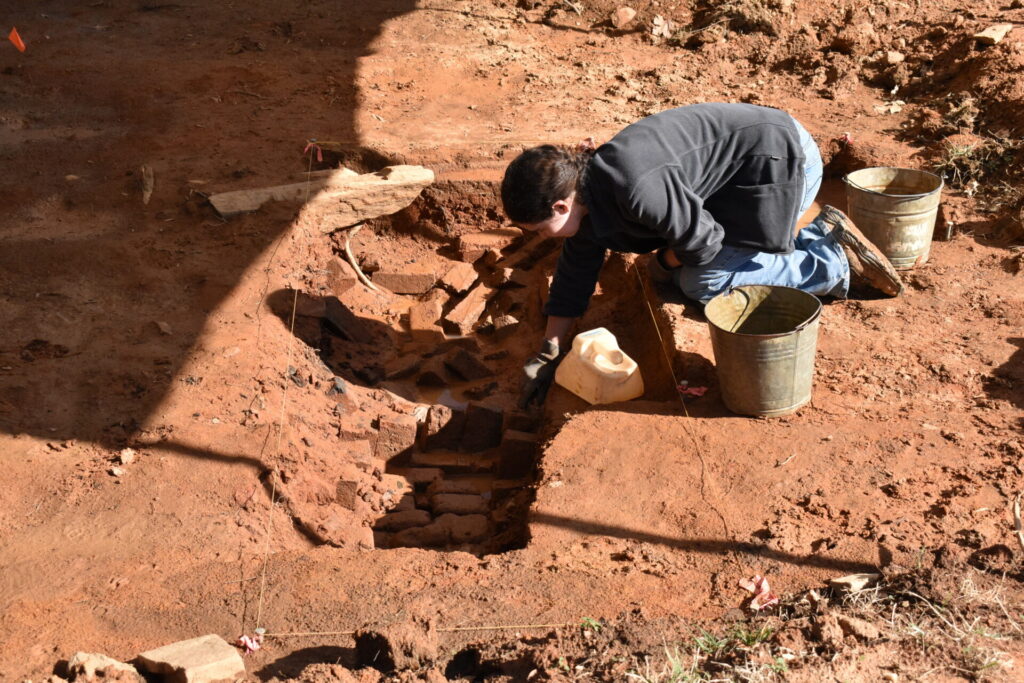
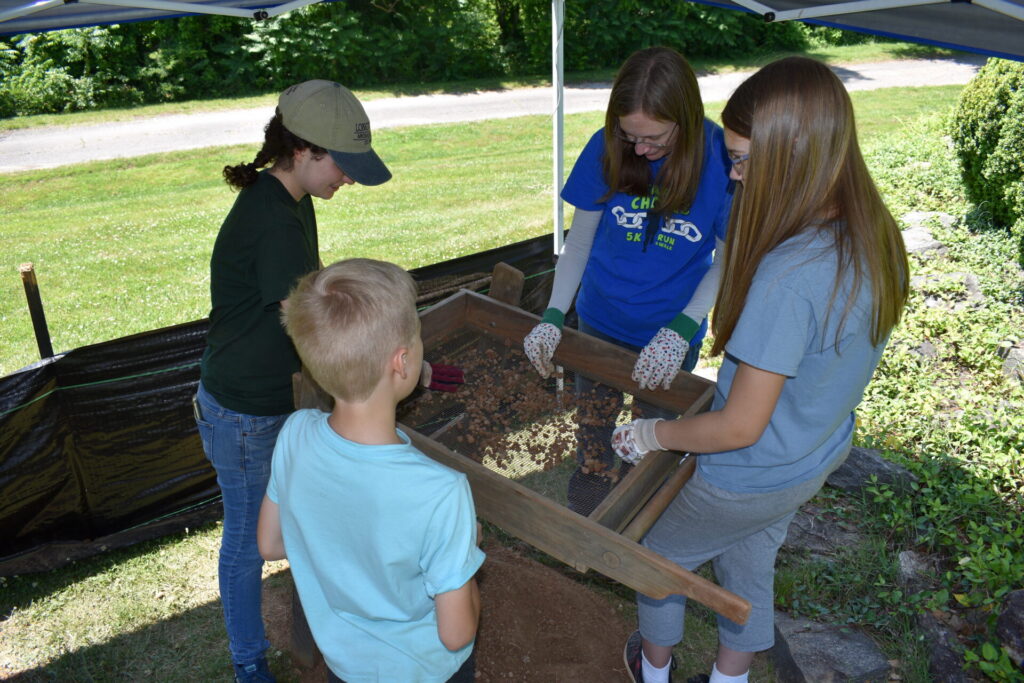
At Red Hill, archaeological research uncovers lost pieces of the plantation’s landscape and gives insight into the lives of the many people who lived and worked here over hundreds of years.
Explore the sections below to learn more about our research projects and learn how you can take part uncovering Red Hill’s past.
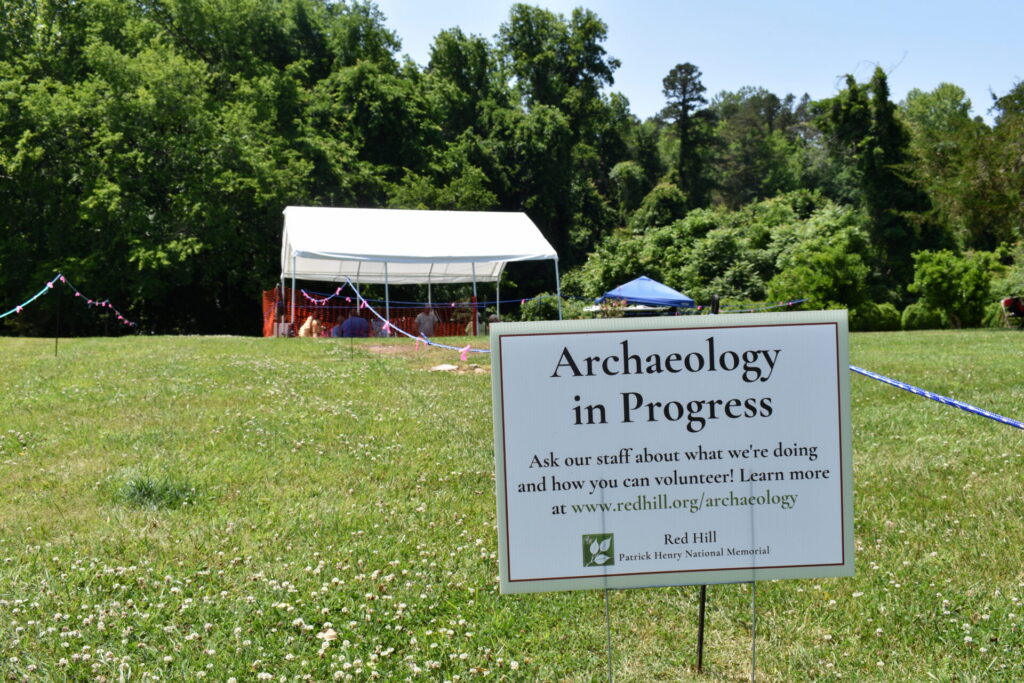
Archaeological Research: Past and Present
Read about our investigation of the Servant's House site
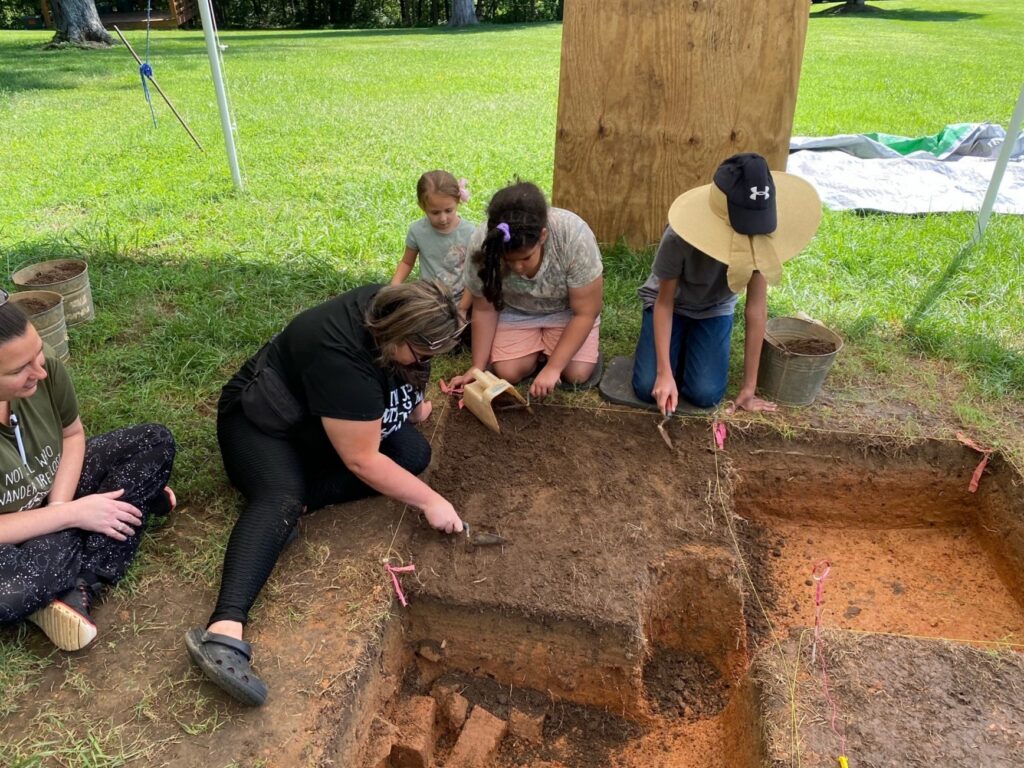
Red Hill’s archaeology program started in Summer 2023 with an investigation of an area where a servant’s house stood in the early 20th century. Maps and aerial photographs from Red Hill’s archives were put into a Geographic Information System to help us locate the site of this structure, a few hundred feet northwest of the Henry House. This was one of several houses rented by sharecroppers and their families in the first half of the 20th century, when Lucy Henry Harrison owned Red Hill. Excavation on this site aimed to uncover any artifacts or building remains that could teach us more about life at Red Hill during that time.
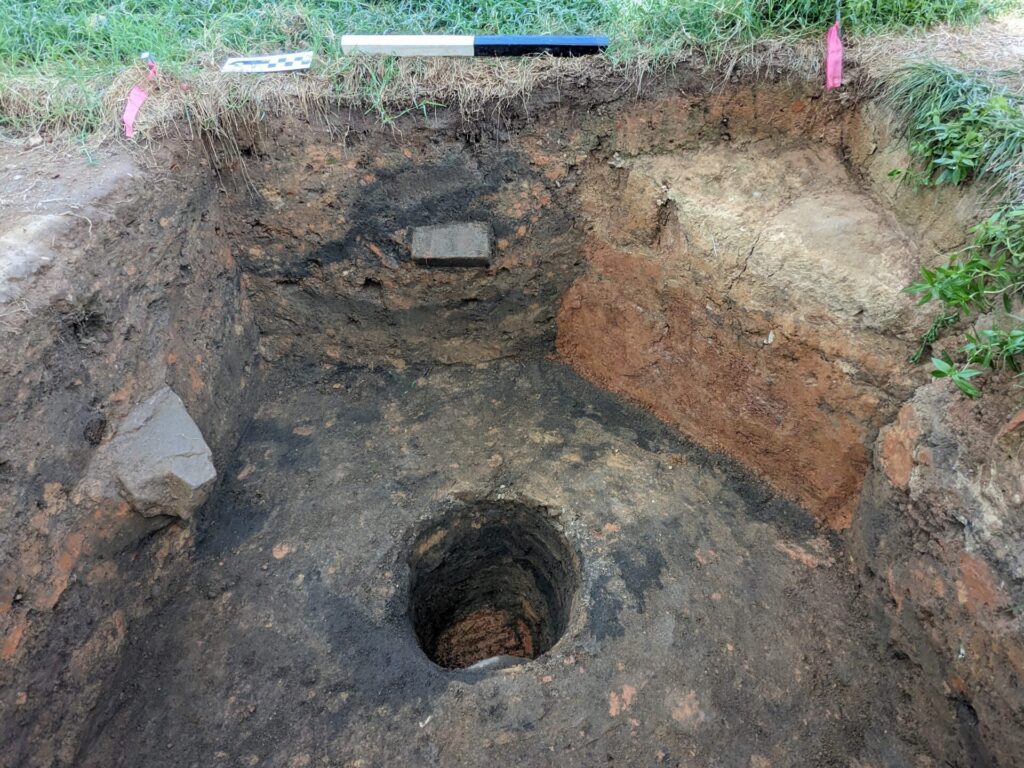
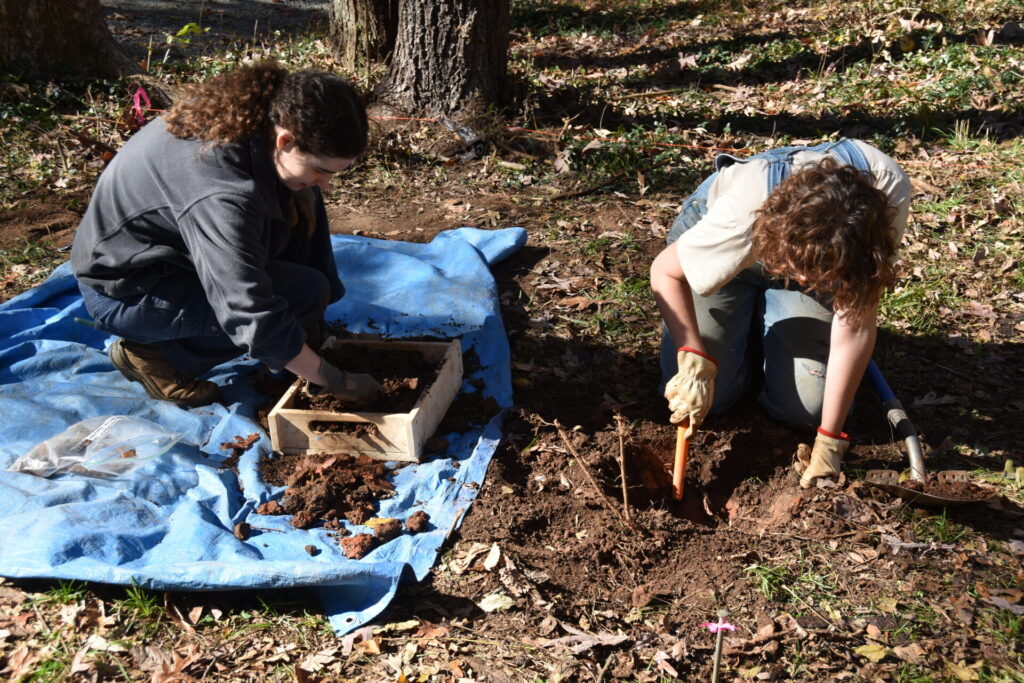
Archaeologists and volunteers dug three 5×5 ft. square test units, with one revealing a deep layer of disturbed soil – an indication that a large feature was dug into the ground and filled back in. Archived letters were discovered later in the excavation which showed that when the building was demolished in 1961, its foundation was also removed and reused in the restoration project. After reaching undisturbed subsoil in the test units, we turned our efforts towards conducting a shovel test pit survey along the western side of the historic grounds, with additional testing around the servant’s house site to discover more about the deep feature in the first unit. A shovel test pit survey involves digging small pits along evenly spaced intervals to give us an idea of what the soil and artifacts look like across a larger area. This will be useful for informing future excavations and continuing to understand the changes in Red Hill’s architectural landscape.
Artifacts from the servant’s house site included bricks, brick fragments, glass, nails, ceramic, some prehistoric lithics, two metal hooks, buttons, a bottle neck with a glass stopper, a sink drain, and several unidentified metal objects. These artifacts were taken to Red Hill’s archaeology lab where staff and volunteers spent the winter and spring cleaning, labeling, and packaging them for storage.
Read about our investigation of the original Law Office location
In 2024, Red Hill’s archaeology program began an investigation of the original site of Patrick Henry’s law office. For more than a century, the law office stood in the backyard of the Henry House, which, at the time, faced south toward the Staunton River. The structure may have been built before Henry purchased Red Hill from Richard Marot Booker in 1794, and Henry used it as a multipurpose space for studying his legal cases and providing overflow sleeping space for his sons and guests. When Lucy Gray Henry Harrison took ownership of her great-grandfather’s plantation in the early 20th century, her renovation plans included transplanting the office further south to stand between the house and the Henry cemetery.
Five decades later, the Patrick Henry Memorial Foundation endeavored to relocate the office to its original site, relying on the memory of architect Stanhope Johnson, who had assisted with Mrs. Harrison’s earlier renovations. The plans for a period-accurate placement of the law office were hindered by the existence of a state road that encircled the property, with a right-of-way that fell over the spot which Johnson recorded as the law office’s original location. Unable to get the Highway Department’s permission to build on the right-of-way, the PHMF placed the restored structure as close as possible, about 75 feet south of the original location, where the building sits today. Today, the state road is gone from the landscape, allowing the potential for the office to be moved back to its original location and for archaeological research to reveal more about the structure.
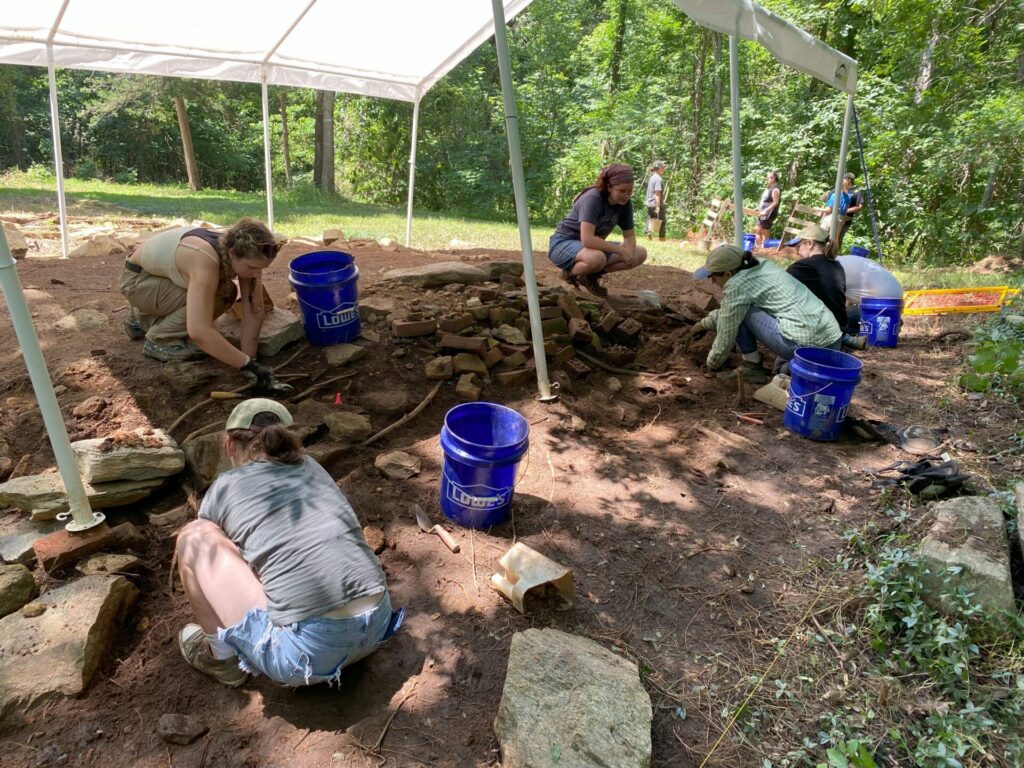
Before any plans could be made to move the law office, an archaeological investigation of its original site was needed to determine whether any features from the first construction, such as foundations or builder’s trenches, still existed and could corroborate Johnson’s record of the original location. The investigation began with a Ground Penetrating Radar survey conducted by Chartrand Geoarchaeological Solutions, which detected several features below the ground surface in the vicinity of the office’s original location. None of these indicated foundations, but one of the smaller features caught our attention for its rectangular shape and orientation similar to that of the other historical buildings. With the help of hard-working volunteers, our team excavated the southern half of the feature, encountering clusters of unlaid brick and charcoal among sandy, mottled soil. The location and shape of the feature led to early conjectures that it could be the remains of the office’s chimney. At about two feet below ground surface, the feature contained layers of bricks arranged roughly in course, indicating a wall that had fallen or been knocked over. The vast majority of artifacts discovered in this feature were bricks and brick fragments, but we also found creamware and whiteware ceramic sherds, bottle glass, windowpane glass, cut nails, and small pieces of mortar.
To check for any other features, the topsoil in this area was carefully stripped using a mini excavator. The mechanical stripping revealed no traces of the office’s foundations, which means they may have been removed and reused at some point. Later in 2025, our team will finish excavating the possible chimney feature.
Read about our investigation of the Double Cabins site
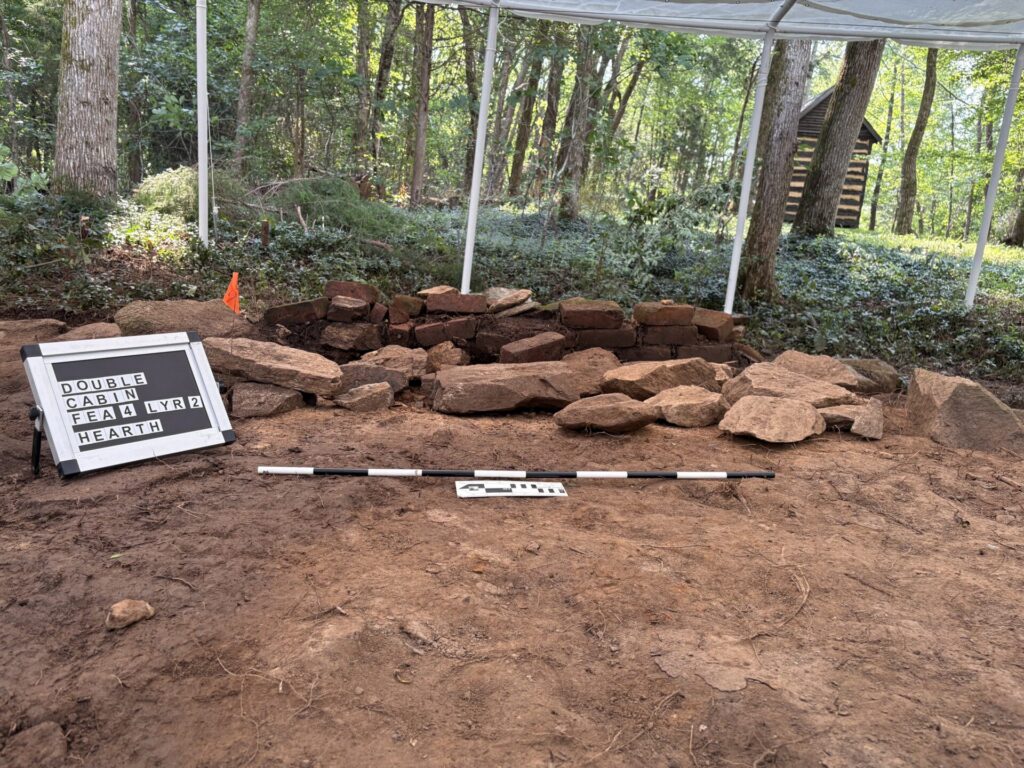
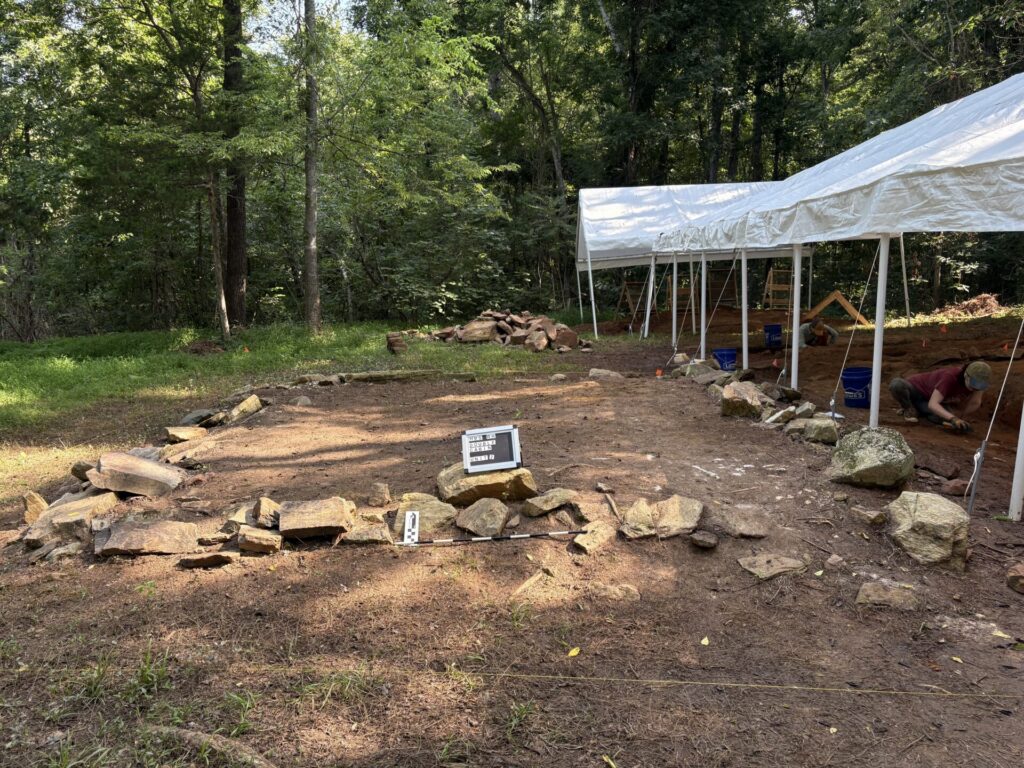
In 2025, Red Hill’s archaeology program began investigating the site of two above ground stone foundations, marking the location of where cabins once stood side-by-side on Red Hill’s Quarter Place. Few records exist to provide information on the cabins’ construction or who lived in them, yet the available documentary evidence shows that they were used by sharecroppers as late as the 1940s. Through archaeological field work, we hoped to gain more knowledge about the cabins themselves, and most importantly, to gain insight into parts of daily life for the people who once lived there.
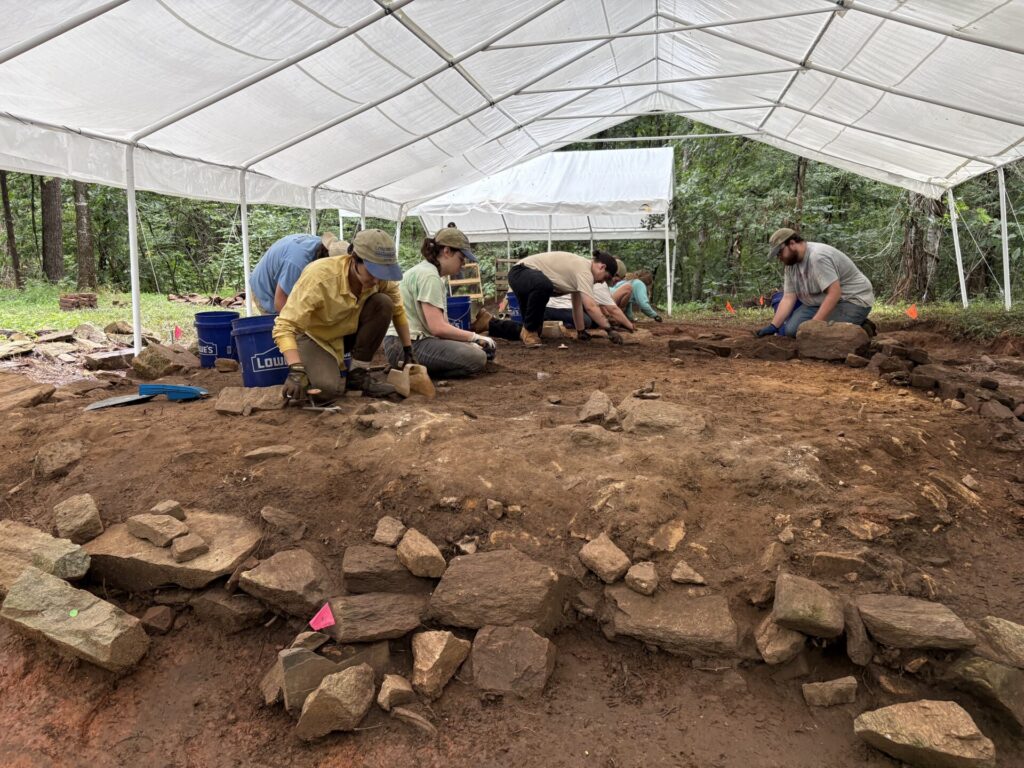
Beginning in June 2025, archaeologists, field technicians, and volunteers worked to excavate the stone foundations, slowly removing and recording foundation stones, artifacts, and features until subsoil was reached. Once excavation was completed, a team of stone masons reconstructed the stone foundations using the stones recovered from the excavation. Following the reconstruction in the fall of 2025, we shifted our focus to a metal detector survey of the areas surrounding the cabins, investigating what kinds of activities may have taken place. This component of the project is ongoing.
The most common artifacts recovered from the Double Cabins site include glass, nails, and ceramics. Among the assemblage, there were many personal items, such as jewelry fragments, pierced coins, shoe soles, and children’s toys. Once recovered from the site, these artifacts were taken to the archaeology lab where they were cleaned, cataloged, and will undergo continued analysis.
Get involved!
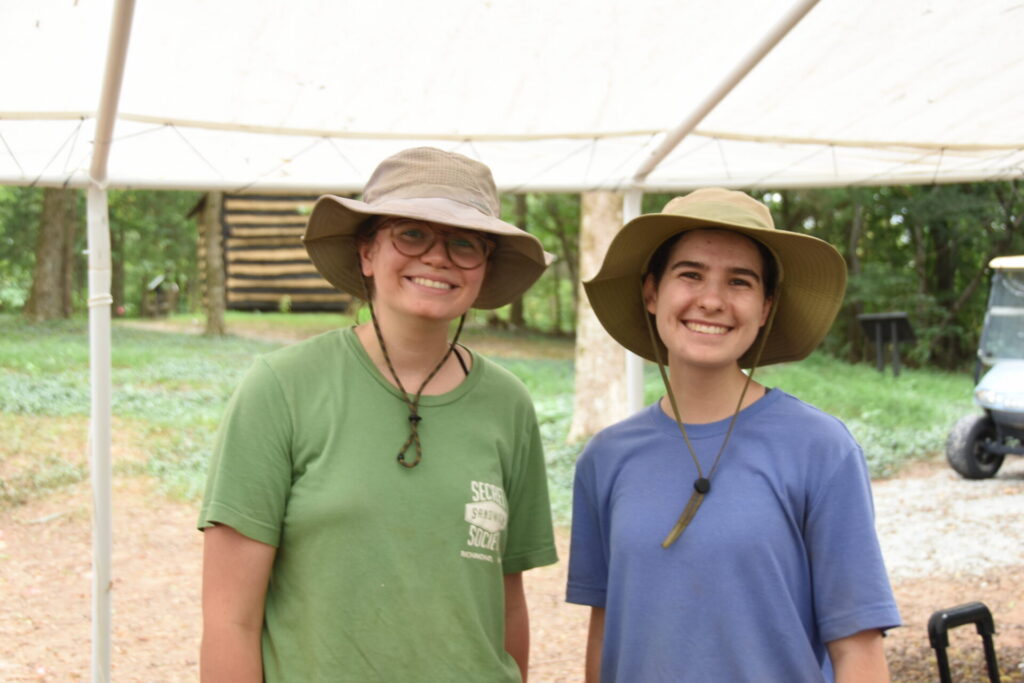
Digging deeper into Red Hill’s history requires some extra hands, which is why we have volunteer opportunities open to anyone interested in participating in archaeology. Volunteers help with excavation during the summer, while they assist with artifact processing in the winter. Equipment and guidance from archaeologists are provided. Whether you come to help for a single day or volunteer weekly, you’ll have the chance to engage hands-on with history and help uncover more of Red Hill’s story.
Currently, there are no archaeology volunteer opportunities available until June 2026. Please check back later for volunteer opportunities and schedules.
For any questions about Red Hill’s archaeology or getting involved, please call 434-376-2044 or email lucia@redhill.org.
If it is your first time volunteering for archaeological fieldwork at Red Hill, please review and sign the acknowledgement of risk and release form in the link below, then email it to lucia@redhill.org. The form is not needed for volunteering in the lab.
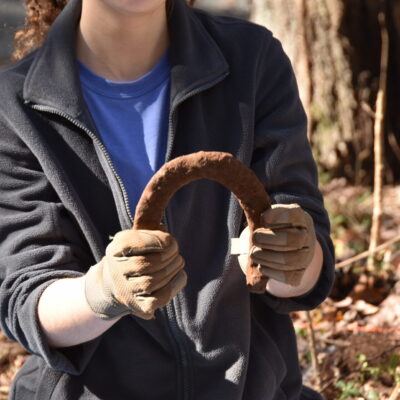
Horseshoe excavated during metal detector survey of the Double Cabins site, 2025.
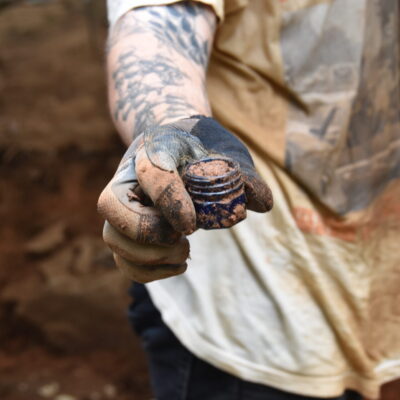
Small glass jar recovered from the Double Cabins site, 2025.
Virtual Lectures
Learn about archaeological projects at Red Hill from our Staff Archaeologists, Lucia Butler and Margaret Dudley.